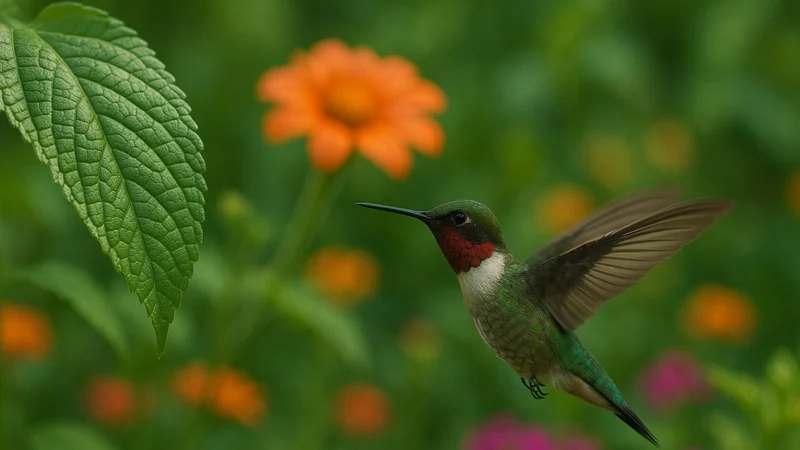
The assumption to leave behind
Most people arrive at a bird song identifier app expecting the music-tagging experience: hold up the phone, wait a few seconds, get a name. So when the app returns two possible warblers instead of one confident answer, the reflex is to blame the app. This piece compares workflows and mental models, not benchmarked accuracy between products.
The reflex is wrong. A pop song is a fixed recording. Every playback is acoustically identical, and Shazam is commonly described as matching short clips against a catalog of known studio recordings. A Song Sparrow, on the other hand, carries multiple song variants in its personal repertoire, sings them differently at dawn than at noon, and shares acoustic space with other species doing the same thing. There is no master recording to match against.
Once you accept that a bird song identifier app is doing pattern recognition on a living, improvising animal rather than fingerprint lookup on a studio file, the whole workflow shifts. You stop expecting one perfect answer and start collecting better evidence. If you want the underlying reason variability matters, how songs and calls carry different kinds of information is a useful detour before the method below.
What works instead
The useful mental model is closer to a field notebook than a music-tagging service. The app is a listener with a strong memory for species-level patterns, and you are the person who supplies context it cannot hear: where you are, what habitat you are standing in, what time of year it is, and whether the bird you glimpsed had a yellow throat or a streaked breast.
Three things change in practice:
- You aim for a clean, sustained sample rather than a quick tag. A single chip lost inside traffic noise gives the app almost nothing to work with. A steady stretch of the same bird calling from the same direction gives it something to lock onto.
- You read shortlists, not verdicts. A good result is often a ranked set of candidates you can narrow down using range, habitat, and a second look. A field-tested view of how call identifier apps actually behave outdoors helps when you are still learning to weigh those shortlists.
- You treat your own eyes and location as part of the identification, not as a fallback for when the app fails.
In practice, more experienced birders often lean on sound ID more readily than newer birders. They are not hearing better. They are feeding the app more of the context it needs and reading its output with appropriate humility.
A compact method to follow
Here is a workflow that holds up across backyards, trails, and unfamiliar parks. It assumes nothing about the specific app, only about how sound identification actually behaves.
- Stop and locate the sound. Before you touch the phone, pin down roughly where the bird is. A recording aimed at empty sky picks up more wind than bird.
- Record a continuous sample of the same bird. Let it sing or call through several phrases if you can. Do not chop the clip the moment you hear one note.
- Note the setting in your head. Habitat, month, and rough region are the three levers that turn a shortlist into a single answer.
- Read the result as a shortlist. If the top candidate matches the habitat and season, that is a strong lead. If a lower-ranked candidate fits your context better, weigh it seriously.
- Confirm with a second signal when you can. A brief visual, a repeat recording from a different angle, or a distinct second vocalization from the same bird all raise your confidence.
- Log the sighting. Even a tentative ID noted with the date and place becomes useful pattern later, both for your own learning curve and for future trips.
Where the Shazam model fits and where it breaks
The table below sketches the shape of the two tasks side by side. Read it as a comparison of workflows, not as a head-to-head product benchmark.
| Situation | Shazam-style music tagging | Bird Call Identifier-style sound ID |
|---|---|---|
| Source signal | Fixed studio recording | Live, variable, improvising animal |
| Good sample length | A few seconds of any clear passage | A sustained clip of the same individual |
| Ideal output | One title, one artist | A ranked shortlist you filter with context |
| Role of location | Irrelevant | Often decisive |
| What to do with a mismatch | Retry the same clip | Re-record, add context, or hold the ID open |
When the rule has exceptions
Sound-first identification is not always the right first move, and pretending otherwise leads to bad habits. Three situations flip the default:
- The bird is in clear view. Plumage, posture, beak shape, and leg color settle a lot of arguments that sound alone will keep open. A Northern Cardinal on an open feeder, for instance, is easier to confirm by its crest and color than by trying to isolate its whistle from a busy hedgerow.
- Dawn chorus or a mixed flock. When several species are singing over each other, no identifier can cleanly separate them from a single omnidirectional phone mic. Walk closer to isolate one bird, wait for a gap, or accept that you are cataloguing a soundscape rather than tagging a species.
- Wind, water, or traffic dominate the clip. If a low rumble is doing most of the work, the app has less signal than you think. Shelter the phone with your body, turn it away from the noise source, or move twenty steps into calmer air.
How Bird Call Identifier supports the method
Bird Call Identifier works well for this pattern of use rather than for a one-tap verdict. Use this quick decision rule based on the clearest clue you have in the moment, then reach for the matching input in the app.
Canopy, dense brush, or a distant treeline where you can hear the bird but not clearly see it is where a recorder earns its place. Aim for a sustained clip of the same individual.
Perched on a feeder, foraging on the lawn, or standing at the water's edge, shape and color often carry more information than a short call. A photo taken in the moment or pulled from your camera roll is the stronger signal here.
If you only glimpsed the bird for a second and remember two things about it, such as a red head and a black back, a plain-language description gives the app enough to narrow the field.
Use the insight in practice
Try the method rather than the reflex the next time a bird is singing from somewhere you cannot see. Give the app a sustained clip and your own habitat, month, and quick glance to work with. Log what you decided, even if you decided you are not sure.
What changes after a few outings is not the app. It is you. You start recognizing when a shortlist is honest and when it is a signal to re-record. You notice which habitats produce clean matches and which ones ask for a photo layered on top. The tool stops feeling like a slot machine and starts feeling like a patient listener you have learned to brief properly, which is the real endpoint of getting better at identification.
If you want this listen, look, or describe workflow on your iPhone for your next walk, Bird Call Identifier is a one-tap install away.