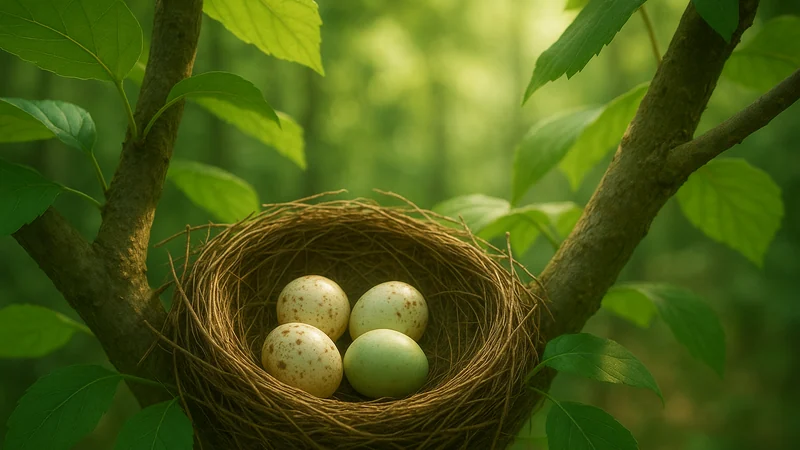
Recognizing the Clues in Eggs and Nests
Imagine a morning hike where you stumble upon a nest cradling speckled eggs. The first step in identification is observing the egg's size, color, and markings. These visual cues are essential in narrowing down the bird species.
Contextual Clues: Habitat and Season
The environment where you find the nest plays a crucial role in identification. Is it nestled in a dense forest, a suburban garden, or a coastal area? Additionally, consider the season, as some birds are migratory and only present during specific times of the year.
Field Profile: Quick Reference
Here's a quick reference to help you identify birds by their eggs or nests:
- Egg Size and Shape: Small and round or large and oval?
- Color and Markings: Plain, speckled, or uniquely patterned?
- Nest Location: High in a tree, on the ground, or in a shrub?
- Materials Used: Twigs, leaves, mud, or feathers?
Common Confusions and Similar Cases
Some eggs and nests may look similar across species. For example, the eggs of a robin might be confused with those of a thrush. Pay close attention to subtle differences in color and nest construction.
Using Bird Call Identifier for Verification
If you're uncertain about your identification, the Bird Call Identifier app can assist by allowing you to record bird calls near the nest. This app helps confirm the species through sound recognition, complementing your visual observations.
What to Observe Next Time
Next time you're out in the field, take note of bird behavior around nests. Are the parents nearby? Do they exhibit particular calls or songs when approaching the nest? These behaviors can provide additional clues to the bird's identity.