The trap
The mistake behind the problem
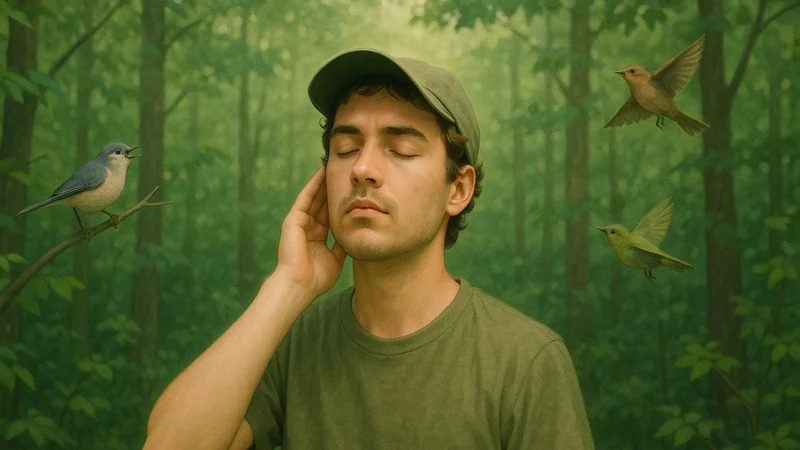
The most common mistake beginner birders make with a sound ID app is trusting the first name that appears on screen and then closing the app. You hear a call, hit record, see a species, and move on. That single tap feels like the whole answer, but accuracy is not a property of the app. It is a property of how you use it.
- First tap: A model provides the closest match by pattern-matching against thousands of recordings, but this is not a guaranteed answer.
- Verified match: A second signal, which may include a longer audio clip or a visual glimpse, confirms the best guess and allows you to log a definitive identification.
Over the course of a season, neglecting to take that second step results in a life list filled with birds that were never actually observed. The same recording tool can provide a reliable identification for one person while leading another to make a misidentification, depending entirely on what occurs in the ninety seconds following the appearance of the result.
Why it convinces you
Why it seems convincing
Sound recognition can seem very convincing because it provides a confident and specific answer along with a photo, a name, and sometimes even a range map. However, the uncertainty that a careful birder might typically experience is often overshadowed by the interface's clean layout. There are three factors that contribute to the illusion that the results are more reliable than they actually are:
- Overlap between species. Warblers, thrushes, and sparrows share phrase structures, buzzy notes, and clipped whistles that models can confuse, especially in short clips. These confusable groups vary by region and season, so a reputable field guide is worth keeping close.
- Background birds. A dawn recording rarely contains one bird. Whichever song is loudest often wins, but the app may lock onto a distant second singer instead.
- Habitat and range assumptions. Some suggestions are geographically plausible but seasonally unlikely. A winter bird in June deserves a raised eyebrow, not a screenshot for the life list.
None of this makes sound ID unreliable. It makes it a probability engine, and probability engines need a human check. If the mechanics of that engine are new to you, our explainer on how sound ID actually matches a chirp to a species walks through what the model is really doing under the hood.
Signal check
A better way to test the situation
Here is a worked example. You are on a wooded trail in late May. You hear a fast, ascending trill from somewhere in the canopy. You record ten seconds and get back Pine Warbler. It sounds right. You could stop there, or you could run a two-minute test that turns a guess into a real identification.
- Record a second, longer clip. If the same species comes back on a fresh recording taken a minute later, that is a genuine second data point.
- Check what else is plausible. Chipping Sparrow, Dark-eyed Junco, and Worm-eating Warbler can all sound like a trill in parts of the eastern United States. Ask which of them belongs in your habitat and season, and cross-check the shortlist against a trusted field guide.
- Look for the bird. Even a two-second glimpse of yellow, wing bars, or tail length can confirm or eliminate the match.
- Note the behavior. Is it singing from a treetop, midstory, or on the ground? Behavior narrows the shortlist as much as sound.
- Reject the ID when nothing lines up. An unconfirmed bird is not a failure. It is honest data.
This process takes less time than scrolling social media at a rest stop. It also builds the muscle memory that turns a beginner into a birder.
Four checks
What a useful result looks like
A useful sound ID result is a name backed by matching context, so treat every suggestion as four questions to answer at once: does the recording quality support a match, does the habitat fit, does the season fit, and does a second signal agree?
- RecordingDoes the clip give the model enough?A clean, close call gives the model something to work with. A distant, wind-blown clip may not, and repeating the recording is often faster than debating the result.
- HabitatDoes the setting fit the species?A Marsh Wren suggestion in a dry pine forest is a red flag, not a rarity. Match the bird to the place before you accept it.
- SeasonIs the bird plausibly here now?Migration windows matter. Warbler waves through the eastern United States peak roughly late April through mid-May, so a spring trill deserves a different shortlist than the same trill in January.
- Second signalDoes anything else agree?A visual glimpse, a repeat recording, or a companion's ear all count. Two independent signals turn a guess into an identification.
When all four align, you have something worth logging. When one is off, treat the suggestion as a lead to investigate rather than a verdict to accept.
In the app
Where Bird Call Identifier helps
That four-question check is easier to run when the tool is built for it, which is where Bird Call Identifier fits in. You record a call, song, or chirp on your iPhone and the app suggests a likely species, with reference photos and habitat notes you can compare against what you are actually seeing and hearing. Sound ID accuracy has not been independently benchmarked across popular birding apps, so the app is built to support verification rather than replace it.
- Cross-check with a photo or description. When a sound clip is ambiguous, you can identify the same bird by photo or by describing what you saw, so two independent inputs can agree before you log the bird. That kind of double-check is among the strongest confirmations available to a solo birder.
- Save the matches you accept. Matches you keep are stored in your sightings so you can review them later, notice patterns, or compare a new call against a bird you have already logged.
- Confirm against the species page. The reference page for each suggestion gives you the visual and habitat cues to run the four-question check without leaving the app: record, tap the species, and compare the photo and habitat notes against what is in front of you.
For deeper reading on how sound ID reliability tends to play out across popular birding apps, our comparison of how sound ID compares across popular birding apps is optional context, not a replacement for the verification workflow above.
The habit
Build a more reliable habit
Accuracy in bird ID is a habit, not a feature. The birders whose lists you trust are not using better apps. They are using the same tools with a stricter internal check.
Build the habit around one rule: never log a bird from a single sound clip alone. Add a photo, a longer recording, a visual glimpse, a habitat note, or an eliminated alternative. If none of those are available, mark the sighting as unconfirmed and move on. Your list will be shorter and truer, and the birds you do log will actually be the birds you saw.
Try the two-minute check on your next walk: record twice, save both to your sightings, and give yourself two minutes to compare habitat and behavior before you accept the answer.