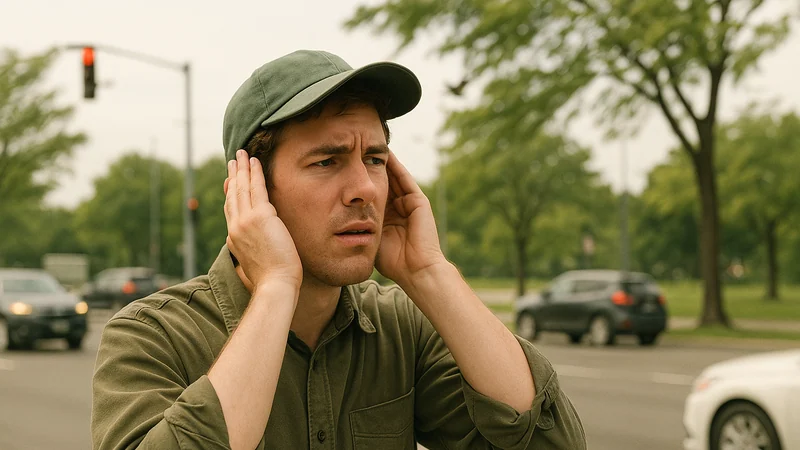
The mistake behind the problem
The most common frustration behind "bird call recognition not working" is not a broken feature. It is a recording that captures more of the world than the bird. When someone lifts a phone toward a distant song, the microphone hears everything in a wide cone: leaves overhead, a highway two blocks away, a neighbor's air conditioner, wind slapping the phone case, and, somewhere in that soup, four faint notes of a warbler.
Recognition models look for a clear acoustic signature: pitch shape, syllable spacing, timbre, and repetition. When the signature is buried under low-frequency rumble or masked by broadband hiss, the app has nothing to confidently match. You get a blank result, a low-confidence guess, or a species that does not belong in your habitat. It feels like failure. It is really a signal-to-noise problem.
The fix is not to record longer or press harder. It is to change what the microphone hears in the first three to eight seconds of the clip.
Why it seems convincing
Your ears are doing something the phone cannot. Human hearing is directional and selective. When you focus on a song sparrow at the edge of a parking lot, your brain suppresses the traffic behind you and brings the melody forward. You genuinely hear the bird clearly. So when you hit record and the phone hears mostly cars, it can feel like the device is broken or the recognition is weak.
None of that is true. Phone microphones are omnidirectional and honest. They capture the actual acoustic scene, not the edited version your attention creates. The bird you heard so clearly may be far quieter than the road, and the app is being asked to identify a whisper inside a shout.
This is why a birder standing in the same spot can say "that is obviously a house wren" while the app returns nothing useful. Both are correct. The birder is using memory, direction, and context. The app is using only what the microphone sent it.
Diagnostic
A better way to test the situation
Before blaming the recognition, run a short diagnostic on the recording conditions. This takes about half a minute and usually solves the problem.
| Symptom | Likely cause | Fix |
|---|---|---|
| Blank or "no match" result | Bird is quieter than the background | Step closer or move away from the noise source |
| Low, hollow rumble on playback | Wind on the microphone ports | Cup a hand around the bottom edge or shield with your body |
| Guess that belongs to another region | Traffic or HVAC dominates the clip | Walk a short distance away, then re-record |
| Confident species that does not fit the habitat | Only a fragment of the phrase was captured | Wait for a full repetition before you stop |
| Different species every attempt | Two birds overlapping, or a shared contact call | Move so one singer is closer, or try again later |
If you want a step-by-step version to run in the field, work through this in order:
- Listen without the phone for ten seconds. Close your eyes. Is the bird actually louder than the background, or are you just focusing on it? If the background wins, move.
- Check the wind on the microphone. Hold the phone still and feel the air on the bottom edge. Any breeze across the mic ports produces low rumble that swamps most songs. Cup your hand loosely around the bottom of the phone as a windscreen, or step behind a tree, wall, or your own body.
- Locate the loudest man-made source. Traffic, HVAC units, lawn equipment, fountains, and playgrounds all radiate broadband noise. Walk roughly twenty to fifty steps away from it, even if that means losing sight of the bird briefly. The bird will usually sing again.
- Point the phone, do not wave it. Aim the bottom microphone toward the bird and hold the phone steady. Movement creates handling noise that looks, to a recognizer, like a percussive event on top of the song.
- Wait for a full phrase. Many songs repeat roughly every five to fifteen seconds. Start the recording, then let the bird complete at least one full phrase inside the clip, ideally two. A clip that catches only the tail of a song has almost no signature to match.
If you run this checklist and the recording still fails, the cause is usually one of three things: the bird is too far away, the species uses a very short or high-frequency call that the ambient noise floor is masking, or you have caught a juvenile or non-vocal contact note that is not the species' identifying song.
What a useful result looks like
Expect a short list, not a single name. When a recording is clean, the top match should be plausible for your location, season, and habitat. If the app returns a species that occurs only two thousand miles away, that is a signal to record again, not to accept the answer.
Read the result the way a birder reads a field mark. Ask three questions before you commit to a species:
- Does the habitat fit? A marsh wren in a suburban driveway is unlikely. A house finch is not.
- Does the season fit? Many songbirds only sing during breeding season. A winter identification of a spring-only singer deserves scrutiny.
- Does a second recording agree? If you can capture the same bird twice, roughly thirty seconds apart, and both clips return the same top species, your confidence should be much higher than after a single clip.
A single low-confidence result is data, not a conclusion. Treat it the way you would treat a two-second glimpse of a bird flying away: interesting, worth logging, not worth arguing about. For a closer look at what the recognizer is actually listening for, the deeper walkthrough is worth a read.
The app
Where Bird Call Identifier helps
Bird Call Identifier is built for the exact moment this article is about: you are outside, the bird is singing, and you want a name. It records what you hear, matches the sound to a likely species, and pairs the match with a photo and description so you can sanity-check the result against the bird in front of you. Depending on the situation, you can also work from a photo or a short plain-language description of the bird.
Each step in the checklist above lines up with something the app can help you do:
- The record step is where sound identification does its work, so a cleaner phrase means a stronger match.
- When audio conditions stay hostile, a photo of the bird is a natural fallback for identification.
- When you cannot get either, a plain description of size, color, and behavior can still narrow the field.
What matters more than any single feature is honesty about limits. Audio identifiers generally struggle in three situations:
- A distant song competing with steady highway or HVAC noise.
- Two or more species singing over each other during a dawn chorus.
- A one-note contact call that a dozen species share.
Accuracy has not been independently benchmarked, and no audio identifier can guarantee a clean result in every setting. When the recording is clean and the bird is a strong singer, matches appear quickly. When conditions are unfavorable, the app is a tool that helps you recognize when to move, wait, or try again. The best way to use it is as a birding companion, not an oracle: keep notes on the birds you are confident about, mark the uncertain ones as uncertain, and return to the same spot at the same hour a few days later.
Build a more reliable habit
The birders who consistently get good identifications from audio are not using different apps. They are using different habits. A short, repeatable routine turns most "not working" moments into clean matches.
- Stop first, record second. Ten seconds of standing still lowers your own handling noise and lets you locate the bird before the clip starts.
- Face the bird with the bottom of the phone. Keep the mic pointed, not tilted at the sky.
- Shield the wind. A cupped hand, a jacket, or your own body between the breeze and the mic changes results dramatically.
- Move away from constant noise. A short walk from a road or an HVAC unit is often the difference between a match and a blank.
- Capture a full phrase, then stop. Long clips are not better clips. One clean repetition beats thirty seconds of ambient sound with a bird buried inside.
- Cross-check with habitat and season. If the top match does not fit where you are standing and what time of year it is, record again before you trust it.
- Keep notes on the uncertain ones. A tricky call you cannot place today may match easily next week when you have a cleaner reference from the same location.
If you want a sense of which backyard species you are most likely to hear, that guide pairs well with this routine and gives your ear a shortlist to match against.
Take one thing into the field tomorrow: before you press record, spend ten seconds listening without the phone and ask whether the bird is actually louder than the background. If it is not, move. That single habit fixes more "bird call recognition not working" moments than any setting ever will.
Next time a song is buried in wind or traffic, use this routine before you record again. A cleaner clip and a little context will usually teach you more than repeating the same failed attempt.