Why this search is happening now
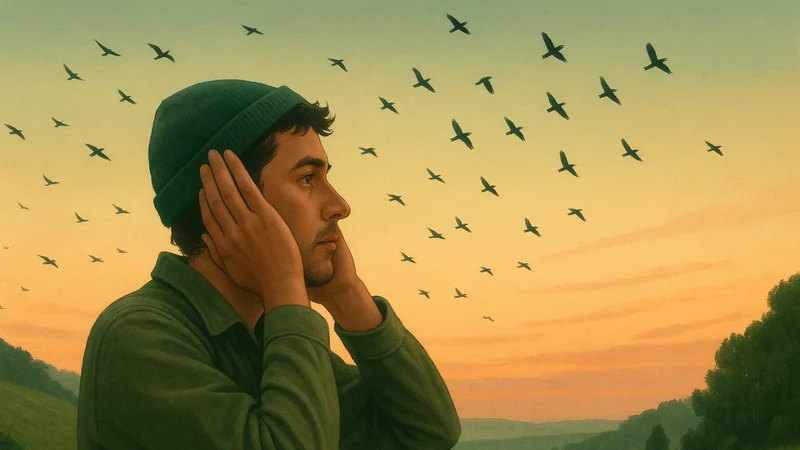
Interest in bird migration season spikes twice a year for a simple reason: the birds show up, and they do not stay long. Warblers you have never heard in your yard can appear for two dawns and then vanish. A hawk river can flow south over a ridge for a single afternoon. People search because they hear something new outside the window, see unfamiliar shapes at the feeder, or notice a friend post a species they have never spotted.
The trend is also driven by better tools. Public radar composites, run by research groups, now show migration intensity in near real time. Local birding groups post daily threads about notable sightings. Sound identification on a phone means you no longer need to know a Blackpoll Warbler by ear to know one flew through your neighborhood before breakfast.
Put together, that means a migration week is less about being an expert and more about showing up during the right two-hour windows with a way to capture what you hear.
The fastest reliable way to investigate
You do not need a full field kit to read a migration week. You need a rhythm you can repeat for five or six days.
- Check migration radar the night before. Look at a public migration forecast map, run by research groups, after sunset. A green or red bloom over your county through the overnight hours usually means birds are moving overhead. Heavy movement often produces a busy dawn the next morning.
- Get outside in the first hour of light. Songbird migrants drop out of the sky at dawn and start feeding almost immediately. The window from about 20 minutes before sunrise to 90 minutes after is when calls are densest and most diagnostic.
- Stand still for two minutes at a time. Movement scares small birds into the interior of trees. If you stop, they resume feeding and calling. Do this in three or four spots along a short walk: an edge with berries, a wet corner, a hedge, a treetop view.
- When a call stumps you, hit record. A ten to twenty second clip is usually enough to work with later. Get the phone microphone pointed toward the bird if you can, and step away from motors, fountains, and dog leashes.
- Log what you confirm. A simple running list of dates, locations, and species turns a week of impressions into a personal migration record you can compare year over year.
Use last night's radar reading to set your morning intention before stepping outside.
| Radar intensity overnight | What to do at dawn | What to expect |
|---|---|---|
| Light | Short 20 minute listen from one spot | Mostly local residents, occasional migrant |
| Moderate | Walk three spots, record anything unfamiliar | Mix of residents and passing migrants |
| Heavy | Full first hour of light, multiple recordings | Fallout potential, new species possible |
Repeat this for five mornings, and you will have a real read on what is passing through, not just a snapshot of resident birds.
What can lead readers astray
Migration weeks are noisy in every sense, and a few habits quietly ruin the reading.
- Only birding on weekends. Peak flights do not care about your calendar. A single strong Tuesday night can be the biggest movement of the week, and by Saturday most of those birds are gone.
- Trusting daylight sightings alone. Many songbirds migrate at night and call as they fly. If you only look up at noon, you miss the whole show. The dawn drop-in is where a phone and a pair of ears earn their keep.
- Assuming familiar shapes are familiar species. A migrant thrush at your feeder is not automatically the resident robin. A small flycatcher in October is not the same species that nested there in June. Migration is when the yard's cast changes fastest.
- Ignoring flight calls. Many migrants give short, high, single-note calls that sound nothing like their song. If you are waiting for the full melodic phrase you learned in a field guide, you will filter out most of what is actually overhead.
- Chasing every rarity report. A vagrant three counties away is exciting, but the honest read of your migration week is the ordinary movement passing through your own patch. That is where the pattern lives.
The fix for most of these is not more expertise. It is a slightly earlier alarm, a willingness to record uncertain sounds, and a habit of writing down what you confirm. Treat the first suggestion from any app as a lead to confirm rather than a verdict, and the workflow retains its integrity even when a call is uncertain. That framing clarifies where a tool actually helps.
Where Bird Call Identifier helps with the real task
The real task during a migration week is triage. You are hearing more species than usual, in shorter windows, often before your coffee is even ready. You do not need a lecture on taxonomy in that moment. You need a quick answer to the call you just heard, and a place to record it.
Bird Call Identifier is built for that narrow, useful job. The advertised flow during a dawn window looks like this:
- Record the sound while it is happening and get a candidate species back.
- Identify from a photo you already took when you only glimpsed the bird.
- Describe the size, color, and behavior for a starting point when you have neither sound nor photo.
- Save each sighting with date and location so a running log builds across the week.
That saved-sightings log by date and location is the piece that pays off over a bird migration season. One morning is a snapshot; five mornings of dated notes reveal a pattern you can read. For a broader look at how different tools perform in the field, an honest look at which bird call identifier apps hold up in real-world conditions gives useful context alongside your own week of notes.
Two honest limits
- Accuracy has not been independently benchmarked here. Distant calls, overlapping songs, and unusual dialects can throw off any app, so treat the first suggestion as a lead and confirm with a second clip or a look when the bird matters.
- Migration produces genuinely rare birds for a given date. Any tool will hesitate on those. Record longer, note the habitat, and cross-check against what local birders are reporting that week.
Used this way, the app is not replacing your ears. It is giving you a second pair of ears during the two hours of the day when there is too much to keep up with.
A practical example
Say it is a Thursday in the second week of a strong spring push. Species mix and timing vary by region and season, so treat the specifics below as illustrative rather than a forecast. The radar the previous night showed heavy movement across your state after 10 pm, tapering before sunrise. You set an alarm for 30 minutes before sunrise and step into the backyard with your phone.
You hit record on three unfamiliar sounds during the first hour, then run each clip through the app back inside. A morning like that can shake out this way:
| Time | Sound heard | App result |
|---|---|---|
| 5:52 am | High, thin seet from a maple top | Suggests Blackpoll Warbler as a top candidate |
| 5:58 am | Rolling musical warble from the hedge | Suggests House Wren, an early-arriving resident |
| 6:04 am | Single sharp chip from a fence-side shrub | Suggests Common Yellowthroat in shrubby cover |
Each of these is a candidate for confirmation with a second clip or a look, not a verdict. You save all three sightings with the date and location. By Sunday, you have five mornings of similar notes. Reading them back, you can see that Blackpolls were only there on the two mornings after big radar nights, House Wrens were there every day, and Yellowthroats showed up midweek and stayed. That pattern is your migration week, written in your own yard, and it is more useful than any generic species list because it is yours.
If you want to extend the same rhythm beyond spring and fall pulses, a walk-through on how to build a call-and-sighting picture of your own backyard pairs naturally with the workflow above.
What to try while the moment matters
Migration weeks reward small, immediate choices more than long-term preparation. If a strong night is forecast for tonight or tomorrow, do three things before you go to bed.
- Set an alarm for 30 minutes before sunrise, not for your normal wake-up.
- Charge your phone and clear a couple of minutes of storage for short recordings.
- Pick one spot outside where you can stand still for two minutes without traffic noise.
Then in the morning, record first and identify second. The birds will not wait for you to remember a field mark, but a 15-second clip will. Keep a brief log for the rest of the week, even a note on your phone, and by the weekend you will have your own read on which species moved through and which stayed.